Market Share: A Dramatic Shift Toward Mid-Mass Platform
The numbers couldn’t be clearer. In 2024, 76% of all small satellites launched worldwide were in the 200-600 kg range, up from just 9% the year before. This is the direct effect of mega-constellation deployments (Starlink, OneWeb) and shifting commercial priorities, as operators require more onboard power, higher resolution, and longer satellite lifespans without spiraling costs.
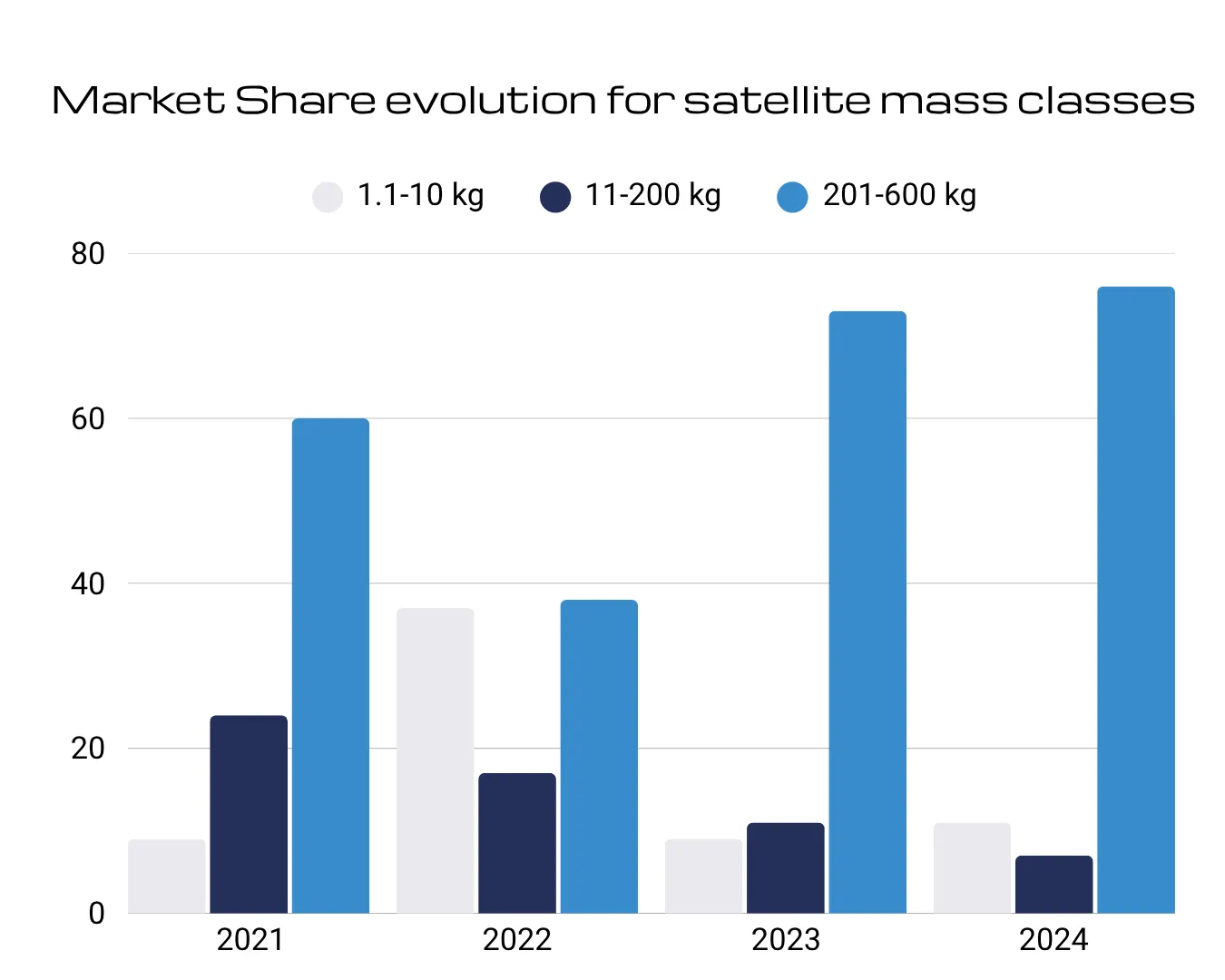
Figure 1 – Market share evolution for satellite mass classes, 2021–2024. Data: BryceTech, NASA, industry reports¹
Why 200–600 kg? The Business Sweet Spot
Satellites in this range represent a genuine “sweet spot” between capability and cost:
- Performance: 3–7x more electrical power than micro/nano satellites, supporting more advanced sensors and real-time payloads.
- Longevity: Typical lifespans reach 3–7 years, outpacing smaller satellites and reducing replacement costs.
- Launch Efficiency: Well-suited for rideshare and batch launches at sharply reduced prices, driven by the commercial space boom.
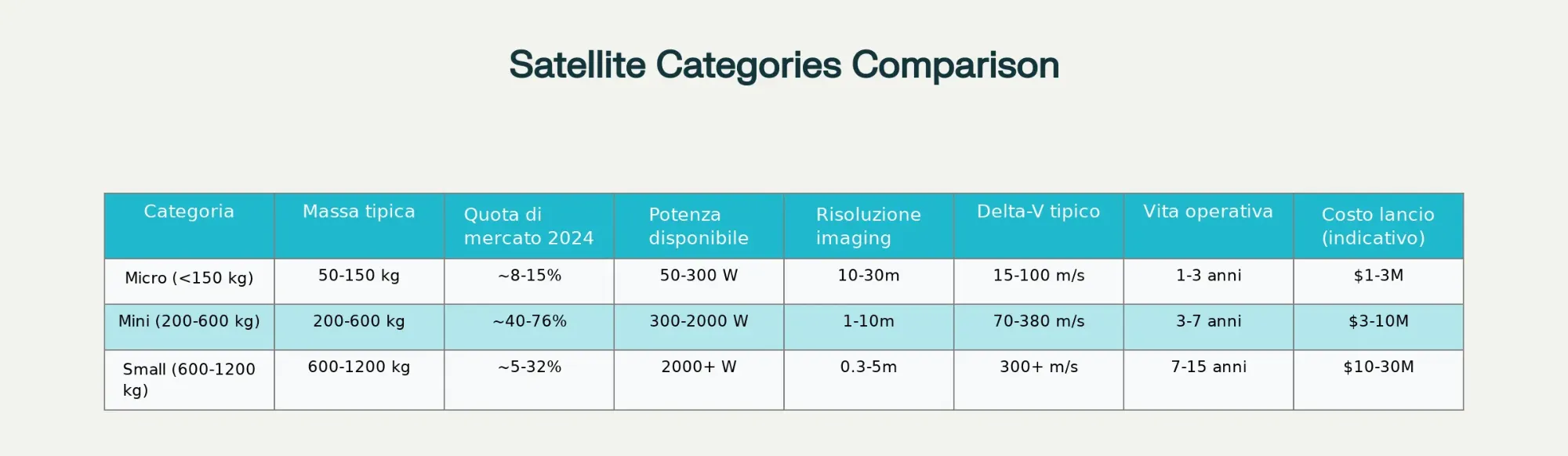
Figure 2 – Satellite Class Comparison: Mass, performance, and costs. Mini-satellites (200–600 kg) combine extended lifespans, higher power, and superior imaging versus micro/nano-sats²
Application Focus: Going Beyond Communications
While mega-constellations for global broadband have stolen headlines, 200–600 kg satellites unlock much more across industry verticals:
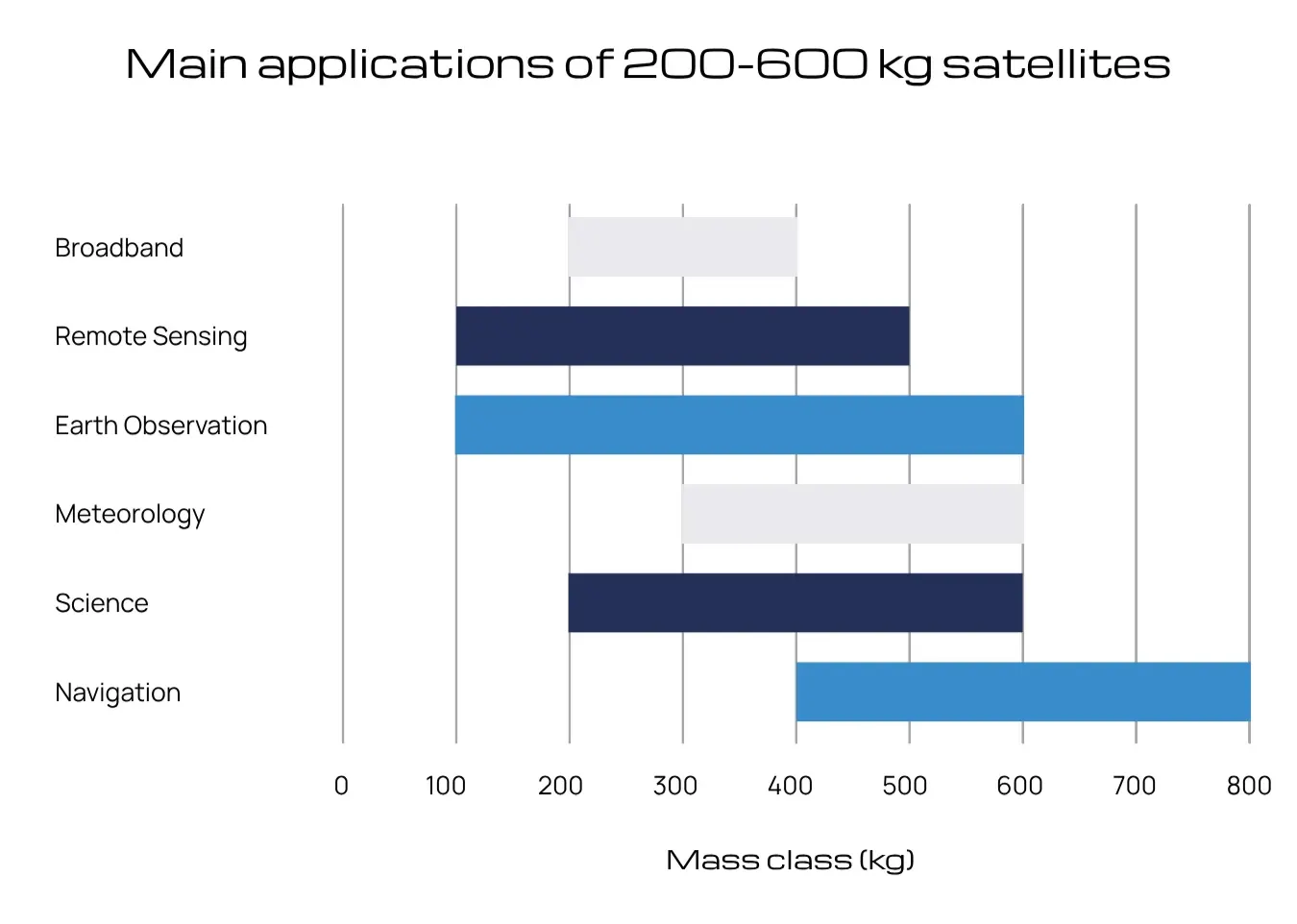
- Broadband Constellations: (200–400 kg) Powering global internet coverage and direct-to-device communications.
- Earth Observation: (100–600 kg) Delivering high-res, low-latency imagery for agriculture, urban planning, environmental monitoring.
- Meteorology: (300–600 kg) Supporting advanced weather tracking with multi-sensor payloads.
- Remote Sensing & Science: (100–500/200–600 kg) From climate studies to disaster monitoring and basic research.
- Navigation/Positioning: (400–800 kg) Extending GNSS and high-precision timing coverage